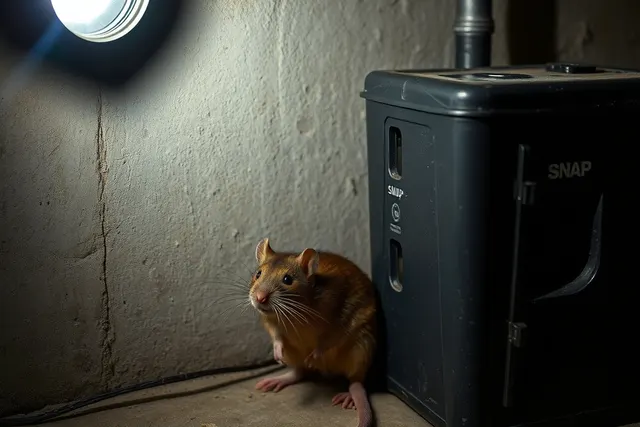
Where Dayton rats live
The Great Miami, Mad and Stillwater rivers meet near downtown, and the levees, bike trails and riverbanks built after the 1913 flood form long green corridors through the city. Rats use those corridors for cover and travel, and homes in neighborhoods along them, such as Riverside-adjacent areas, Old North Dayton, McCook Field and the blocks near downtown, see more rat activity.
Vacant houses and demolished lots in parts of West Dayton and East Dayton add to the pressure. Rats nest in empty buildings and overgrown lots and feed at occupied homes nearby, and when a house is torn down, they move next door.
Rat removal visits in Dayton, start to finish
On a Dayton lot, the technician starts with the yard and the alley side of the garage, looking for burrows, worn runways and gnawed wood at the base of doors. They check under porches and along fences, then go into the basement or cellar to look along the top of the foundation, around pipes, at any coal chute and at the floor drain. Stations go in along the foundation, the garage and any lot line facing vacant property, and traps go inside on the runways after a few nights of pre-baiting.
Most catches happen on the second visit, about a week later. Sealing follows when activity drops: porch skirts with buried hardware cloth, mortar in foundation gaps and metal at the garage slab edge. Three or four visits over about three weeks is typical.
Historic homes in the Oregon District and St. Anne's Hill
Dayton's historic districts have brick and frame homes from the 1800s with stone foundations, cellars, and in some cases closed-off fireplaces and old cisterns. Rats can find their way through gaps in old masonry and up through damaged drains. Sealing in these homes means mortar matched to the old foundation and metal set where it will not show, so ask about experience with historic homes.
Dayton rat removal cost
| Dayton situation | Typical range | What drives it |
|---|---|---|
| Rats in a basement only | $250–$500 | Visits, basement layout |
| Rats next to a vacant lot | $300–$600 | Extra stations along the lot line |
| Rats near the river under a garage | $300–$600 | Burrows, slab sealing |
| Foundation sealing on an older home | $700–$2,000 | Stone or brick, coal chutes, cisterns |
While you wait in Dayton
Close trash cart lids and keep carts off the garage wall. Bring pet food inside and take down bird feeders for a few weeks. If a nearby house was recently demolished, check your garage and foundation for new holes. Do not fill active burrows; it just moves the rats. Keep children and pets away from burrows and droppings.
Old North Dayton and the river neighborhoods
Old North Dayton, McCook Field and the neighborhoods closest to the rivers have older homes, many on narrow lots near the levees and rail lines. Rats travel the river corridor and the tracks, and these homes see more activity than neighborhoods farther from the water. Exterior stations along the side of the lot facing the river or tracks are often worth keeping after the job.
Signs of rats on a Dayton lot
Look for holes two to four inches across against garage slabs, porches, fences and foundations, with loose dirt fanned out in front. Rat droppings are about three quarters of an inch long with blunt ends, often in small piles in the garage or basement. Greasy rub marks along walls and gnawed corners on wooden doors and trash carts are other signs. At night, rats are often seen running along fences or the base of garages toward a food source.
Keeping rats off a Dayton lot afterward
Once the colony is cleared, close trash carts, keep them away from the garage, store pet food and seed in metal cans, and trim weeds along fences and alleys. Fix gaps in garage doors and slabs. If you live next to a vacant lot or the river corridor, keep two or three locked stations in place and have them checked monthly. Talk to neighbors; rats on one lot rarely stay there.
Questions to ask before hiring for a Dayton rat job
Ask whether the quote covers the garage, porches, fences and basement, and how many visits are included. Ask how stations will be placed if you have pets, and whether they will be left in place afterward. For historic homes, ask how foundation sealing will be matched to the original masonry. Confirm the Ohio license number before work begins.
Common findings in Dayton rat inspections
| Where | What technicians often find | Usual fix |
|---|---|---|
| Garage | Burrows under the slab, gnawed door corners | Stations, slab and door sealing |
| Porch | Holes behind lattice | Buried hardware cloth skirt |
| Lot line | Runways from a vacant lot | Lot-line stations, monthly checks |
Read the full rat removal overview for Ohio or go back to rodent control in Dayton.