Marion, OH facts that affect rodent control
| Marion fact | What it means for rats and mice |
|---|---|
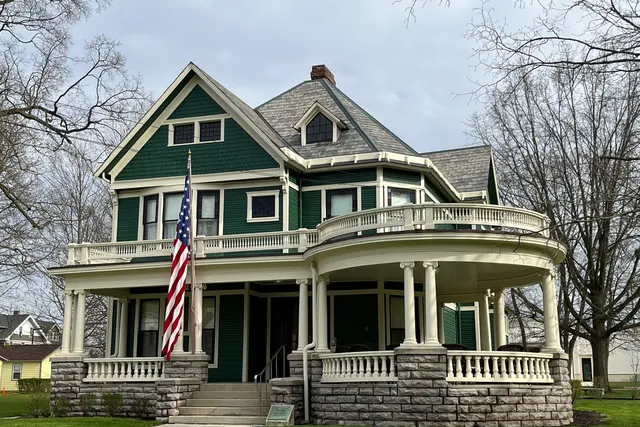
| Seat of Marion County and hometown of President Warren G. Harding | Older homes near the Harding Home and downtown have aging foundations. |
| Long a rail crossroads with several lines through the city | Rail corridors support rats near nearby homes. |
| Known for popcorn and grain processing | Grain handling can feed rat populations; secure feed and seed at home. |
| Surrounded by flat farmland | Harvest drives field mice into garages on the edges of town. |
Rail, grain and rodents
Marion grew as a rail hub, with several lines crossing the city, and as a center for farm machinery, grain and later popcorn processing. Rail corridors and grain handling support rat populations, and homes within a few blocks of the tracks and grain facilities tend to see more rats than homes elsewhere in town.
If you live near the rail lines and see holes two to four inches across along your garage or foundation, expect rats rather than mice, and plan for exterior stations as well as trapping inside.
Older Marion housing
Neighborhoods around downtown and the Harding Home are filled with frame and brick homes from the late 1800s through the 1940s, many with basements, front porches and detached garages. Mortar gaps, old basement windows and gaps around utility lines let mice in, and rats burrow under garage slabs and porches.
Sealing these homes is mostly foundation and garage work: repointing mortar, covering old windows, and packing copper mesh into gaps around pipes. See rodent proofing.
Farm country all around
Marion County is flat, productive farmland, and fields come right up to the edges of the city. When corn and soybeans are harvested in September and October, field mice lose their cover overnight and head for the nearest buildings. Garages and basements on the edges of town get the first wave.
What rodent control costs in Marion
Marion prices tend to sit a bit below larger metros. Mouse trapping in Marion tends to run $200 to $400, rat removal $250 to $550. Sealing an older home typically runs $500 to $1,300; a newer home is often $300 to $700. Homes near rail lines may benefit from ongoing exterior stations.
How rodent control works in Marion
- Inspect the yard, garage, porches and foundation, then the basement, kitchen and attic.
- Trap inside along runways; place locked exterior stations if rats are present.
- Seal the foundation, garage and utility gaps with mortar and metal.
- One follow-up visit clears traps and confirms the house is quiet.
See rat removal for the visit-by-visit process.
Tips for Marion homeowners
Keep trash carts closed and off garage walls. Seed of any kind and pet food should live in metal cans. Seal the garage before harvest and set early-warning traps in September. If you live near the tracks, check the base of the garage and foundation for burrows each spring and fall.
Marion rodent calendar
In Marion, mouse activity jumps in late September and October with the harvest, stays high through winter, and tapers in spring. Rats near the rail lines and grain facilities are active year-round and most visible outdoors from spring through fall. The best time to seal a Marion home is August, before harvest; spring is a good time to check the garage and foundation for new rat burrows.
Rentals and older homes in Marion
A good share of Marion's older housing is rented, from single-family homes to doubles. Mice move between units through shared basements and walls, so treating both sides of a double at once works best. Tenants should report rodents to the landlord in writing with dates and photos. Landlords with several properties often save by sealing them all before fall.
Before you call in Marion
Look under the kitchen sink and behind the stove for droppings, check the basement walls for gaps and droppings, and walk the outside of the garage for burrows. Note the size of droppings: rice-sized means mice, raisin-sized means rats. That helps the technician plan the first visit.
Marion's older neighborhoods near downtown
The streets around downtown Marion and the Harding Home are lined with older frame and brick houses, many with full basements, porches and detached garages along alleys. In these homes, mice come in through mortar gaps and old basement windows, and rats burrow under garage slabs, especially closer to the rail lines. Sealing is mostly masonry and garage work, and the inspection should include the alley side of the garage.
Typical Marion rodent jobs and price ranges
Common Marion jobs and what they usually cost:
| Situation | Typical range | What it includes |
|---|---|---|
| Rats around a garage near the rail lines | $300–$650 | Locked stations by the tracks side, burrow work and garage sealing |
| Mice in an older home near downtown | $450–$1,200 | Trapping plus foundation and window sealing |
| Field mice in a garage after the fall harvest | $250–$550 | Trapping, door seal and corner guards |
Marion neighborhoods we cover
- Downtown Marion
- Harding Home area
- East Side
- West Side
- North Marion
- South Marion
- Lincoln Park area
- Mount Vernon Avenue corridor