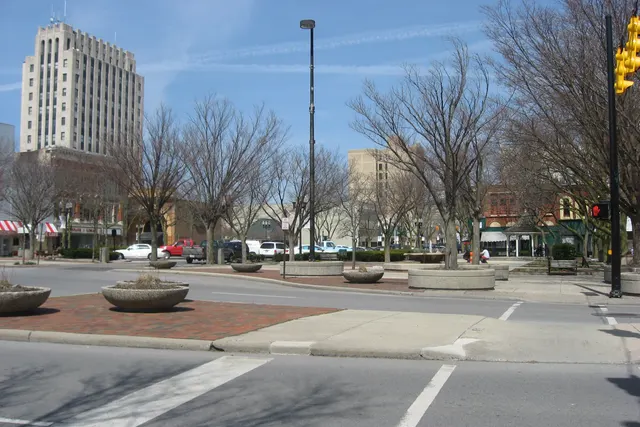
Lima, OH facts that affect rodent control
| Lima fact | What it means for rats and mice |
|---|---|
| Seat of Allen County; boomed after oil was found nearby in 1885 | Oil-boom and industrial-era homes have aging foundations and coal chutes. |
| Home of Lima Locomotive Works history, a refinery and the Joint Systems Manufacturing Center | Industrial and rail land supports rats near older neighborhoods. |
| Several rail lines and the Ottawa River cross the city | Homes near the tracks and river see more rats; exterior stations help. |
| Surrounded by Allen County farmland | Harvest sends field mice into garages on the city's edges. |
Lima's industrial past and older homes
Oil was discovered around Lima in 1885, and the city boomed. Lima Locomotive Works built steam engines there for decades, an oil refinery still operates on the south side, and the Joint Systems Manufacturing Center, long known as the Lima Army Tank Plant, builds Abrams tanks. Worker neighborhoods from the early and middle 1900s fill much of the city with two-story frame houses and bungalows on basements, many with detached garages along alleys.
In those older homes, rodents come in through foundation mortar gaps, old basement windows and coal chutes, under porches and around utility lines. Rats often live along alleys and under garage slabs; mice travel up through the walls from the basement.
Rail lines, the Ottawa River and rats
Several rail lines cross Lima, and the Ottawa River runs through the city. Rail corridors, riverbanks and industrial land support rats, and homes within a few blocks of them see more activity than homes in newer areas on the edges. Locked exterior stations along the foundation and garage are often worth keeping after the job on these lots.
Surrounded by farmland
Allen County is heavily agricultural, and corn and soybean fields come right up to the edges of Lima and the surrounding townships. The fall harvest sends field mice toward the nearest buildings in late September and October. Garages and basements on the edges of town get the first wave, and mice that are not caught there move on into kitchens and attics.
Our guide on why mice come inside in the fall has a month-by-month plan for getting ahead of it.
What rodent control costs in Lima
Lima prices tend to sit a little below larger Ohio metros. A mouse trapping program usually costs $200 to $400 and rat removal $250 to $550. Sealing an older Lima house with a stone or block basement typically runs $500 to $1,300. Newer homes on the edges are often $300 to $700.
How rodent control works in Lima
- Inspect the alley side of the garage, porches and foundation, then the basement, kitchen and attic.
- Set traps inside along runways; place locked stations outside if rats are present.
- Seal foundation gaps, basement windows, coal chutes and utility lines with mortar and metal.
- Come back within two weeks to empty traps and look for anything new.
See rat removal and mouse control for details.
Tips for Lima homeowners
Keep garbage carts closed and away from garage walls. Seal seed and pet food in metal cans, not bags. Clear weeds along the alley so burrows are easy to spot. Set a few traps in the garage before harvest. Renters should send the landlord a written note with dates.
Lima rodent calendar
Lima's fall mouse rush follows the Allen County harvest, usually late September through October, and activity stays high indoors through winter. Rats near the rail lines, the refinery and the Ottawa River are active most of the year and most visible from spring through fall, when new burrows appear along garages and alleys. Late summer is the best time to seal before harvest, and spring is a good time to check the yard and alley for burrows.
Rentals and older homes in Lima
Lima has many older homes that are rented, including doubles and houses split into apartments. Mice move between units through shared basements and walls, and rats along alleys can affect several houses at once. Landlords with several properties often save by having them inspected and sealed together. Tenants should report rodents in writing with dates and photos; Ohio landlords are generally responsible for keeping units fit and habitable.
Older Westside and Eastside homes
Lima's Westside and Eastside neighborhoods were built for the city's oil, rail and factory workers, with two-story frame houses, bungalows and some brick homes on full basements. Many have detached garages along alleys. The typical Lima job in these neighborhoods combines trapping in the basement and kitchen, locked stations along the alley side of the garage if rats are present, and foundation sealing with mortar and metal. Larger homes near Faurot Park take longer to inspect and seal.
Typical Lima rodent jobs and price ranges
Common Lima jobs and what they usually cost:
| Situation | Typical range | What it includes |
|---|---|---|
| Rats along an alley garage near the rail lines | $300–$650 | Alley-side stations, burrow work and garage slab sealing |
| Mice in a Westside bungalow basement | $450–$1,100 | Trapping plus foundation and window sealing |
| Field mice in a garage on the edge of town after harvest | $250–$550 | Trapping, door seal and corner guards |
Lima neighborhoods we cover
- Downtown Lima
- Westside
- Eastside
- South Lima
- North Lima area
- Faurot Park area
- Ottawa River area
- Market Street corridor