8 minute read · Updated October 2026
Is it really mice in the wall?
Start by confirming what you are hearing. Mice make light, quick scratching and skittering sounds, mostly after the house goes quiet at night. Rats make heavier thumps and gnawing. Squirrels are loudest just after sunrise and in late afternoon, and their noise is usually in the attic or ceiling rather than low in a wall. The noises in walls and attics page compares the sounds each animal makes.
Then look for supporting evidence: rice-sized droppings under the kitchen sink, behind the stove or along the basement sill plate, chewed food packaging, or a pet fixated on one spot on the wall. If you find those, it is almost certainly mice.
How mice get into wall cavities
Walls are not sealed boxes. In most Ohio houses, wall cavities connect to the basement, the attic or both, and mice use those connections like hallways.
- Balloon-framed walls in pre-1940 homes run unbroken from the basement to the attic, so a mouse entering at the sill can climb straight to the third floor.
- Plumbing and wiring holes drilled through the top and bottom plates of walls connect each floor to the next.
- Gaps where pipes pass through the cabinet floor under kitchen and bathroom sinks open directly into the wall behind.
- Gaps behind dishwashers, ranges and refrigerators lead into the wall and the space under the floor.
- Roofline gaps let mice into the attic, and from there they drop down into exterior wall cavities.
That is why the scratching you hear in a second-floor bedroom wall usually has its source in the basement or the attic, not in the bedroom.
Step by step: getting mice out of the walls
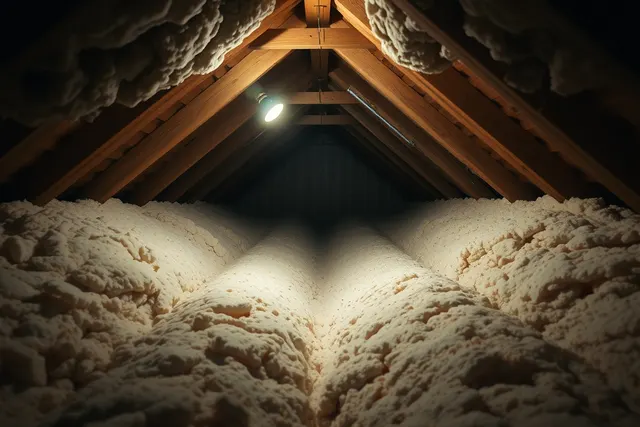
- Find the ends of the wall. Go to the basement below the wall and the attic above it. Look for droppings along the top of the foundation, around pipes and wires, and in the attic insulation near the top of the wall.
- Trap where the wall opens up. Set snap traps along the basement sill plate, in the attic near the wall plates, under the kitchen sink and behind appliances. Place them flush against surfaces with the trigger end toward the wall.
- Do not use poison. A poisoned mouse often dies inside the wall, and the smell can last weeks. Our guide to the dead mouse smell in a wall explains what happens then.
- Seal the house from outside in. Close the entry points mice use to get into the house first: sill plate gaps, weep holes, utility penetrations, garage door corners and roofline gaps. See rodent proofing.
- Seal interior connections second. Pack copper mesh around pipes under sinks and behind appliances, and close holes in top plates where you can reach them from the attic or basement.
- Keep trapping for two weeks after the last catch. Mice sealed inside will come out to find food and water and hit the traps.
Should I cut a hole in the wall?
Almost never for live mice. Cutting a hole lets you see one small section of a cavity, but mice move through the whole system and will avoid a trap placed in a new opening. Opening drywall is usually only worth it when a mouse has died inside and the smell is unbearable, and even then a technician will try to pinpoint the spot with an inspection camera through an outlet box first.
Why mice in walls keep coming back
The most common reason is that the entry point outside was never found. Trapping catches the mice that are inside, but the gap they used is still open, and new mice find it within weeks, especially in fall. The second reason is food. If there is pet food, birdseed or an open bag of flour within reach, mice have every reason to stay. The third is neighbors: in doubles, rowhouses and condos, mice move between units through shared walls, so one unit treated alone rarely stays clear.
What it costs to get mice out of the walls
| Job | Typical Ohio range |
|---|---|
| Mouse trapping program, 2 to 3 visits | $200–$500 |
| Sealing a newer home | $300–$800 |
| Sealing an older home with a stone or block foundation | $600–$1,500 |
| Roofline and soffit sealing | $300–$900 |
| Dead mouse removal from a wall | $150–$450 |
See the full Ohio rodent control cost guide for what drives these ranges.
When to call a pro
Call when you have been trapping for more than two weeks and still hear activity, when you cannot find the entry point, when mice are in more than one part of the house, or when you have heard them in a child's room. A technician who inspects houses every day can usually find the gap in an hour, and our mouse control page explains what a professional visit includes.
Mice in walls in Ohio's common house types
Where mice travel inside the walls depends on how the house was built. In pre-1940 balloon-framed homes, common in older Cleveland, Akron, Toledo and Columbus neighborhoods, exterior walls are open from the basement to the attic, so traps on the basement sill and in the attic catch mice using the whole wall. In postwar Cape Cods, mice favor the knee-wall spaces upstairs. In ranches and newer two-story homes, the wall between the garage and the house and the walls around the kitchen plumbing are the usual highways.
If you know your house type, you know where to start looking.
Mice in the walls of a double, rowhouse or condo
In attached housing, the wall you hear mice in may be shared with a neighbor. Mice travel through shared walls, basements and attics, so trapping in your unit alone often slows the problem without ending it. Talk to your neighbor or building manager. A coordinated plan, with traps in each unit and sealing in the shared spaces, works far better. Renters should report the problem to the landlord in writing.