Youngstown, OH facts that affect rodent control
| Youngstown fact | What it means for rats and mice |
|---|---|
| Seat of Mahoning County on the Mahoning River | The old mill corridor along the river supports rats that move into nearby neighborhoods. |
| Youngstown Sheet and Tube closed its main works in 1977, starting decades of population loss | Thousands of vacant homes have been demolished; each teardown can push rats into the houses next door. |
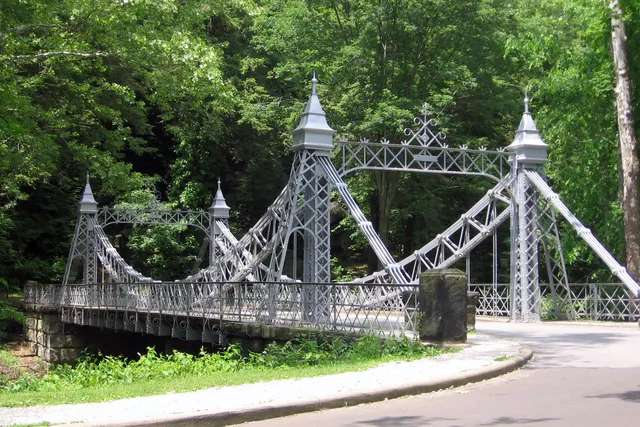
| Mill Creek Park covers more than 2,000 acres of wooded gorge on the west side | Homes along the park see heavy deer mouse pressure each fall; seal garages before October. |
| Much of the city's housing is early 1900s wood frame on stone or block cellars | Cellar mortar and coal chutes are the main entry points, so sealing is mostly masonry work. |
| Home to Youngstown State University | Rentals near campus see frequent mouse problems around move-in and move-out. |
Why Youngstown homes deal with so many rats
Youngstown was built by steel. Between the 1890s and the 1960s, mills lined the Mahoning River and the city filled with workers' houses: two-story wood frame homes on narrow lots, many with front porches, stone or block cellars and detached garages along alleys. When the mills began closing in 1977, the population fell sharply over the following decades. That left many houses empty, and the city and the land bank have demolished thousands of them.
Vacant houses and overgrown lots are ideal rat habitat. Demolition then scatters the rats living there into the houses that remain. On blocks where several houses have come down, the occupied homes in between often have rats in the garage and basement within a season. If a house near you was torn down recently, it is a good time to check your foundation and garage for new holes.
Mill Creek Park and wooded edges
Mill Creek Park runs for miles through the west side of the city and into Boardman, a deep wooded gorge with lakes, waterfalls and dense cover. It is one of the most beautiful parks in Ohio, and for homeowners on its edges it also means a steady supply of deer mice and white-footed mice. These mice move into garages, sheds and basements when fall nights turn cold, often in large numbers in a single week.
Homes near the park benefit most from sealing the garage door and foundation before October and from setting a few traps as an early warning. Deer mice carry a higher health risk than house mice, so wet their droppings with disinfectant before cleaning rather than sweeping them up.
What a Youngstown rat job looks like
- Walk the lot, the alley side of the garage and the empty lots next door for burrows and runways.
- Check the cellar for gaps in the stone or block, old coal chutes and floor drains.
- Set locked exterior stations along the foundation and garage, and traps inside along the cellar walls.
- Return in about a week to set or reset traps and check burrows.
- Seal the cellar and garage with mortar, sheet metal and copper mesh once activity drops.
Because the pressure often comes from vacant property next door, many Youngstown homeowners keep a few locked stations along the property line after the job is done, checked monthly. That catches newcomers before they settle in. See rat removal for how the full process works.
Mice in Mahoning Valley homes
Mice are the most common call in Youngstown, Boardman, Austintown and the surrounding townships. In the city's older two-story houses, mice come in through cellar walls and travel up through the walls to the kitchen and upstairs bedrooms. In the postwar ranches of the suburbs, the garage door and the sill plate are the usual entry points. Lake-effect snow reaches the Mahoning Valley too, and long winters keep mice indoors well into spring.
A typical mouse control job here means trapping in the kitchen and cellar, sealing the foundation and utility gaps, and one or two follow-up visits.
Rodent control cost in Youngstown
Youngstown prices tend to sit at or a little below the statewide average. A mouse trapping program usually runs $200 to $450 and a rat program $250 to $600. Sealing an older Youngstown house with a stone or early block cellar often lands between $600 and $1,500, depending on how much mortar work is needed. Homes next to vacant lots may need longer station service, which typically runs $35 to $70 a month.
Ask for trapping and sealing priced separately, and ask how many follow-up visits are included. If a neglected vacant property is the source of your rats, you can report it to the city, but treating your own house is what keeps them out.
Steps Youngstown homeowners can take now
Keep garbage carts closed and away from the garage wall. Clear brush and debris along the property line, especially next to an empty lot, so burrows are easy to see. Keep birdseed, grass seed and pet food in sealed metal bins. Look at the cellar walls with a flashlight for daylight showing through gaps. And if you rent, report rodents to your landlord in writing with dates and photos.
Boardman, Austintown and the townships
The suburbs around Youngstown, including Boardman, Austintown, Canfield and Poland, are newer and less affected by vacancy, and their rodent calls are mostly about mice coming in from fields, woods and the Mill Creek corridor. In those ranches and split-levels, the garage door, crawlspace vents and the gap where the A/C line enters the wall are the main problems, and sealing is quicker and cheaper than in the city's older cellars.
Youngstown neighborhoods we cover
- North Side near Wick Park
- West Side
- South Side
- East Side
- Brownlee Woods
- Idora
- Lansingville
- Cottage Grove
- Fosterville
- Uptown
- Downtown