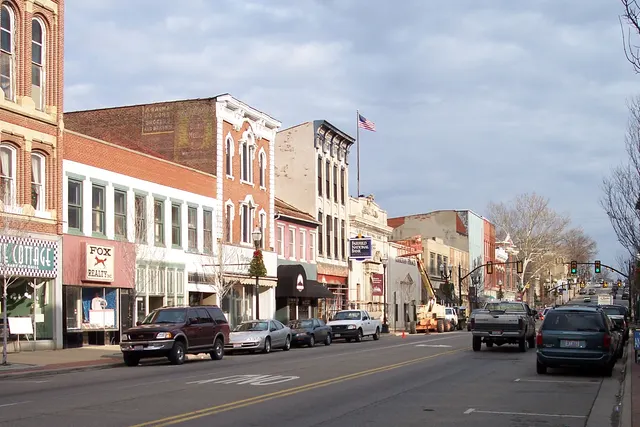
Lancaster, OH facts that affect rodent control
| Lancaster fact | What it means for rats and mice |
|---|---|
| Seat of Fairfield County, founded in 1800 and birthplace of William Tecumseh Sherman | Square 13's historic homes have stone foundations and carriage houses to seal. |
| Mount Pleasant rises over downtown in Rising Park | Wooded hillsides hold deer mice near homes. |
| Gateway to the Hocking Hills region | Cabins and sheds near the hills need careful deer mouse cleanup. |
| Long history of glass manufacturing | Worker housing from that era has aging basements. |
Historic homes in Lancaster
Lancaster was founded in 1800 and is the birthplace of Civil War general William Tecumseh Sherman. Its Square 13 Historic District and the streets around downtown hold some of the finest 1800s homes in central Ohio, along with later houses built for workers in the city's glass factories. Stone and brick foundations, cellars, porches and carriage houses are common.
In homes this old, rodents find mortar gaps between foundation stones, old cellar windows and coal chutes, gaps around utility lines, and openings under porches. Mice travel through the walls; rats burrow under porches and outbuildings.
Hills, woods and the Hocking River
Mount Pleasant, a sandstone outcrop in Rising Park, rises right above downtown, and the wooded hills of the Hocking Hills region begin just southeast of the city. The Hocking River runs through town. Woods mean deer mice and white-footed mice, which move into garages, sheds, cabins and basements every fall. Homes near the parks and wooded hillsides see the most.
Newer homes and farmland
Lancaster has grown as part of the Columbus metro area, and newer subdivisions on the north and west sides sit next to farmland. Field mice from those fields move into attached garages at harvest time, so sealing the garage door and utility gaps before fall is the most effective step for newer homes.
What rodent control costs in Lancaster
In Lancaster, a mouse trapping program typically costs $200 to $450 and rat removal $250 to $600. Sealing a historic home commonly runs $700 to $1,800 because of stone foundations, porches and carriage houses. Newer homes are often $300 to $700. Shed and cabin cleanups after deer mice usually run $200 to $500.
How rodent control works in Lancaster
- Inspect the yard, porches, outbuildings and foundation, then the cellar, kitchen and attic.
- Indoor traps on the runways, plus outdoor locked stations if there are rats.
- Seal the foundation with mortar matched to the old masonry, close cellar windows, and seal utility gaps and the garage.
- Revisit after one to two weeks to collect traps and look for new signs.
For cleaning up after deer mice in a shed or cabin, see droppings cleanup.
Tips for Lancaster homeowners
If you live near Rising Park or the wooded hills, seal the garage and keep a clear strip along the foundation before October. Wet droppings in sheds and cabins with disinfectant before cleaning. In historic homes, check under porches and along cellar walls each fall. Seed and kibble belong in metal containers.
Lancaster rodent calendar
In Lancaster, the fall mouse movement starts as early as late September in homes near the wooded hills and Rising Park, and a little later on the farmland edges to the north and west. Mice stay active indoors through winter. Rats near the Hocking River and older downtown blocks are most visible outdoors from spring through fall. Cabin and shed owners in the hills southeast of town often discover deer mouse damage when they open up in spring.
Rentals and older homes near downtown
Many older homes around downtown Lancaster have been converted into apartments or doubles. Mice travel between units through shared walls and cellars, so treating one unit alone rarely ends the problem. Landlords get better results treating and sealing the whole building at once, and tenants should report rodents to the landlord in writing with dates and photos.
Square 13 homes and carriage houses
The homes in Lancaster's Square 13 Historic District are among the grandest in central Ohio, many built in the early and mid-1800s. They often have stone foundations, deep cellars, back stairs and carriage houses. Each of those adds work to an inspection and a sealing job. When choosing who to hire for one of these homes, ask whether they have sealed historic stone foundations before and how they match mortar so the repair does not damage the original masonry.
Typical Lancaster rodent jobs and price ranges
What Lancaster calls usually turn into, with typical ranges:
| Situation | Typical range | What it includes |
|---|---|---|
| Mice in a Square 13 home's cellar and walls | $800–$2,000 | Traps, mortar work on the stone cellar and porch screening |
| Deer mice in a cabin or shed near the Hocking Hills | $250–$600 | Trapping, wet cleanup and gap screening |
| Field mice in a newer north side garage | $250–$600 | Trapping, door seal and utility gaps |
Lancaster neighborhoods we cover
- Square 13 Historic District
- Downtown Lancaster
- Mount Pleasant area
- East Lancaster
- West Lancaster
- Hocking River area
- Memorial Drive corridor
- North Lancaster