7 minute read · Updated October 2026
How to recognize a deer mouse
Deer mice have a crisp two-tone coat: brown or tan on top and bright white on the belly and feet. Their eyes and ears are large for their size, and their tail is also two-toned, dark on top and light underneath. White-footed mice look very similar and live in the same places. House mice, by contrast, are a more uniform gray-brown with a lighter but not bright white belly, smaller eyes and a nearly hairless tail.
Deer mice also behave differently. They often stash seeds, acorns and dog food in boots, drawers, stored cushions and engine compartments, and they are more common in rural and wooded settings than in city houses.
Where Ohio homeowners find deer mice
- Garages and sheds next to woods, fields or creek corridors.
- Cabins, campers and boats stored over winter, especially in the Hocking Hills and other wooded areas.
- Pole barns and outbuildings on rural and semi-rural lots.
- Homes along park edges and ravines, such as near the Cuyahoga Valley, Mill Creek Park or wooded metro parks.
- Basements and attics of homes on wooded lots.
What hantavirus is, and how real the risk is
Hantavirus pulmonary syndrome is a rare but serious lung illness. In North America, the deer mouse is the main carrier of the strain that causes it. People are usually infected by breathing in dust from dried droppings, urine or nesting material, most often while sweeping or vacuuming out a closed-up shed, cabin or garage.
Cases are rare, and most have been reported in western states. Ohio has seen very few. But the illness can be severe, and the precautions are simple, so it is worth treating any deer mouse cleanup with care.
How to clean up deer mouse droppings safely
- Air it out. Open doors and windows of the shed, cabin or garage for at least 30 minutes before you start, and leave the area while it airs.
- Wear protection: rubber or disposable gloves, and ideally an N95 or better respirator for large amounts.
- Do not sweep or vacuum. Dry sweeping or a household vacuum puts dust into the air.
- Wet everything. Spray droppings, urine stains and nesting material with a disinfectant or a mix of 1 part bleach to 10 parts water until soaked, and wait five minutes.
- Wipe up with paper towels and put everything in a plastic bag. Seal it, place it in a second bag and put it in the outdoor trash.
- Disinfect surfaces again, including floors, shelves and anything the mice touched.
- Remove gloves carefully, then wash your hands with soap and water.
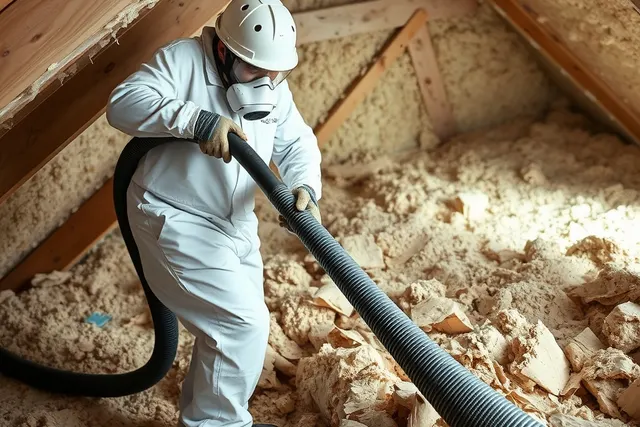
For heavy contamination in an attic, crawlspace or closed building, a professional droppings cleanup with HEPA equipment and respirators is the safer choice.
Keeping deer mice out
Deer mice get in the same way house mice do: through gaps at garage doors, around utility lines, at foundation and roofline openings, and through vents and doors on outbuildings. Seal those with copper mesh, hardware cloth and metal, and store seed, pet food and anything edible in metal cans. Our rodent proofing page covers the materials. For cabins and campers stored over winter, block openings like exhaust pipes and vents with mesh, set traps before closing up, and do a careful wet cleanup when you open up in spring.
When to see a doctor
If you develop fever, muscle aches and fatigue within a few weeks of cleaning up rodent droppings, especially followed by coughing or shortness of breath, see a doctor and tell them about the rodent exposure. Early symptoms are flu-like, so the exposure history matters.
Cleaning out a cabin, camper or shed in spring
Spring opening is when most people meet deer mice. Before you go in, open every door and window and let the space air out for at least half an hour. Put on gloves and a mask. Look before you touch: check drawers, cabinets, cushions, mattresses and the engine compartment of campers and boats for nests and seed stashes. Spray everything you find with disinfectant until soaked, wait five minutes, then wipe up and double-bag it.
Wash fabric items like cushion covers and bedding in hot water. Throw away anything that is heavily soiled and cannot be washed, including chewed cardboard and old insulation. Disinfect hard surfaces, and run any ventilation for a while afterward.
Garages and pole barns
Garages and pole barns on Ohio's rural and wooded lots often hold feed, seed, firewood and stored equipment, all of which deer mice love. Store feed and seed in metal cans, keep firewood off the floor and away from walls, and check mower and snow blower housings for nests in spring and fall. A few snap traps along the walls through winter catch deer mice before they spread.
Keeping a stored camper or boat free of deer mice
Campers and boats stored for an Ohio winter are prime deer mouse habitat. Before storage, remove all food, wash out cabinets and vacuum crumbs. Block exhaust pipes, furnace and water heater vents and other openings with steel or copper mesh, and leave yourself a reminder to remove it in spring. Set a few snap traps inside and around the tires. Check on the camper once or twice during winter if you can. In spring, air it out before going in and clean up any droppings with the wet method.