9 minute read · Updated October 2026
What you need
A strong flashlight, a pencil, a phone for photos, gloves, and an hour. The pencil is a sizing tool: if a pencil slides into a gap, a house mouse can squeeze through it. If the pencil fits, a mouse can get through. For rats, use a coin: a hole a quarter fits into is big enough for a young rat.
The best time to look outside is just after dark, when you can shine the flashlight from inside the house outward, or turn on interior lights and look for light leaking out at ground level.
Outside: start at ground level
- Garage door: check both bottom corners with the door closed. A gap here is the number one entry point in newer Ohio homes.
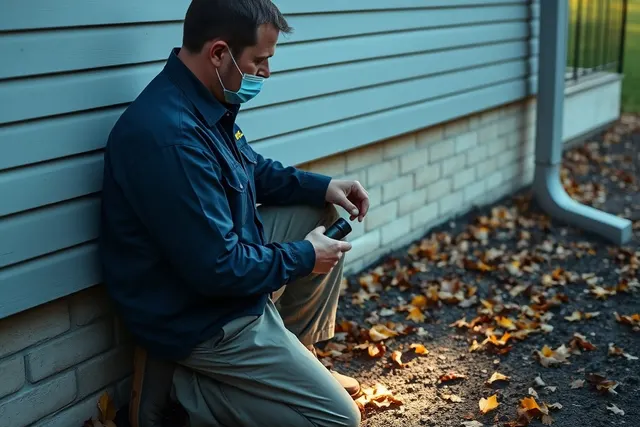
- Foundation: walk the full perimeter looking for cracks, missing mortar, holes where old lines once passed through, and gaps where siding meets the foundation.
- Utility penetrations: look where the gas line, water main, A/C line set, cable, phone and outdoor outlets enter the house.
- Weep holes: small openings at the base of brick veneer. They are designed to drain moisture but let mice in unless fitted with rodent-proof vents.
- Dryer and bath vents: make sure flaps close fully and are not stuck open.
- Crawlspace vents and access doors: check for torn screens, rust and loose doors.
- Under porches and decks: look for burrows, droppings and gaps where the porch meets the house.
Outside: look up
Mice climb brick, siding and trees easily. Check the roofline from the ground with binoculars or from a ladder if you are comfortable: gaps at soffits, gable vents with torn screens, roof returns where one roof meets another, and gaps around plumbing vents and attic fans. Note any tree branches touching or overhanging the roof; they are a direct route for mice and squirrels.
Inside: the basement or crawlspace
Most mice in Ohio homes enter low, so the basement is where you are most likely to find evidence. Shine your flashlight along the top of the foundation wall, where the wooden sill plate sits on the concrete or stone. Look for droppings, gnaw marks, dark rub marks and gaps you can see daylight through. Check around every pipe and wire that passes through the foundation, around basement windows and any old coal chute, and at the floor drain. In a crawlspace, look for droppings on the vapor barrier and torn or pulled-down insulation.
Inside: kitchen, bathrooms and laundry
Open the cabinets under the kitchen and bathroom sinks and look at the holes where pipes come through the floor or wall. Pull out the stove and look behind it, and remove the kick plate under the dishwasher. In the laundry room, check around the dryer vent and the washer hookups. In homes with an attached garage, check the door between the garage and the house for a gap at the bottom and look at the shared wall for holes around pipes and wires.
Inside: the attic
If you have heard noises overhead, look in the attic near the eaves and around the attic hatch. Mice leave tunnels and flattened paths through insulation, droppings near the top plates of walls, and shredded nesting material. Light coming in at the eaves or around vents points straight at the entry point.
How to seal what you find
Rodents chew through foam, caulk, plastic and wood. Use materials they cannot chew: copper mesh packed into gaps around pipes, hardware cloth over vents and larger openings, sheet metal over chewed corners and old chutes, and mortar or concrete patch for foundation cracks. Sealant goes over the top to hold mesh in place and keep weather out. Our rodent proofing page lists materials for each type of gap.
Seal after you have trapped the mice inside, or at the same time while keeping traps out. Sealing mice inside the house sends them deeper into the walls.
The gaps homeowners usually miss
- The sill plate along the top of the foundation, especially behind stored boxes and the furnace.
- Weep holes in brick veneer, which look like intentional gaps because they are.
- Roof returns and gable vents on two-story homes.
- The gap under the door from the garage into the house.
- Holes behind the dishwasher and range.
If you have checked everything and mice keep appearing, a professional inspection is worth it. Technicians see these houses every day and often find the gap in minutes. See mouse control for what a visit includes.
Entry points by Ohio house type
Pre-1940 homes with stone or rubble foundations usually leak at washed-out mortar, old coal chutes and cellar windows. Postwar brick ranches and Cape Cods leak at weep holes, the sill plate and gable ends. Split-levels leak where the lower slab meets the framing. Homes built since the 1990s usually leak only at the garage door, the utility penetrations and roof returns. Knowing your house type tells you which part of this checklist to start with.
Write it down
As you go, photograph each gap with the pencil or coin next to it for scale and note where it is. That list is exactly what a technician needs, and it helps you compare quotes, since a good quote will name the same gaps.
Signs that point to a specific gap
Some evidence points straight at an entry. Dark rub marks around a pipe where it passes through the foundation mean rodents are using that hole. Droppings piled at one corner of the garage door mean mice are coming in under it. Gnawed wood around a gap shows they have been widening it. Fresh dirt on the basement floor below a crack can mean rats are digging in from outside. Shredded insulation near an eave in the attic points to a roofline gap.