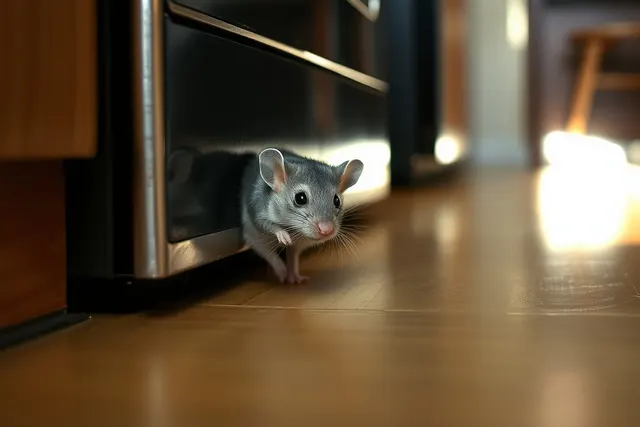
Low entries and high entries
Most Kettering mice come in low: through gaps at the sill plate, brick weep holes, crawlspace vents and the bottom corners of the garage door. Those mice end up behind the kitchen stove, under the sink and in the basement. A second group comes in high, climbing the big oaks and maples that now overhang many roofs and entering at soffits, gable vents and roof returns. Those mice live in the attic or the upstairs knee walls.
A good inspection checks both. If the quote only covers the foundation and garage but you are hearing noises overhead, ask about the roofline.
How Kettering mouse visits usually go
The first visit to a Kettering home checks both the low and high routes: the basement or crawlspace, sill plate and garage, then the attic or knee walls and the roofline from outside. Traps go where droppings are found, the low gaps are sealed right away, and roofline gaps are closed once traps are working. A follow-up a week or two later clears traps and confirms the activity has stopped. If branches overhang the roof, expect a recommendation to trim them back.
Kettering mouse control cost
| Kettering home | Trapping | Typical sealing |
|---|---|---|
| Ranch with attic activity | $250–$500 | $450–$1,100 |
| Cape Cod with knee walls | $250–$500 | $450–$1,100 |
| Split-level with crawlspace | $200–$450 | $400–$1,000 |
Crawlspaces in Kettering split-levels
Some Kettering split-levels and ranches sit partly on crawlspaces. Torn vent screens and loose access doors let mice in, and droppings pile up on the vapor barrier over a winter. Sealing vents with metal mesh and fitting a tight access door is often part of the job, with crawlspace cleanup quoted separately if the barrier is heavily soiled.
Tonight in a Kettering home
Check the knee-wall storage or attic hatch area for droppings, look under the kitchen sink and behind the stove, and move food and pet food into hard containers. Set a few snap traps along the basement wall or behind the stove.
Southern Kettering and newer neighborhoods
Southern Kettering, toward Centerville and the Indian Riffle area, has some newer homes and more wooded lots than the older north end. Mice there come from the woods and creek corridors and usually start in garages in October. Sealing the garage and keeping firewood away from the house are the most useful steps, along with a few early-warning traps.
Signs of mice in a Kettering home
In a Kettering ranch, the first evidence is often in the kitchen: droppings behind the stove or in the drawer under the oven, and chewed food packaging in the pantry. In Cape Cods, people hear light scratching behind the short upstairs walls at night. In the attic, mice leave tunnels and flattened paths through the insulation near the eaves. In crawlspaces, droppings collect on the vapor barrier near the access door.
Pets often notice first. A cat staring at the stove kick plate or a dog pawing at the knee-wall door is worth paying attention to.
Cleaning up after mice in a Kettering attic or crawlspace
With the mice trapped and the house sealed, it is time to clean. In an attic with light activity, droppings near the hatch can be wetted with disinfectant and wiped up, and the area sanitized. If the insulation is full of tunnels, nests and droppings, removal and replacement is usually the better choice. In a crawlspace, a soiled vapor barrier is usually replaced. Wear gloves and a mask, and never sweep or vacuum dry droppings with a household vacuum.
A year of mouse prevention in Kettering
Trim branches back from the roof in summer and seal soffits, gables and the garage door in August. In September, move seed and pet food into metal cans and set a few traps in the garage and basement. October is when most Kettering mouse calls start; check traps weekly and look in the knee walls. Through winter, listen for scratching overhead. In spring, clean up and note where the mice were so any remaining gaps can be closed.
Questions to ask before hiring in Kettering
Ask whether the quote covers the roofline as well as the foundation and garage, how many visits are included, and what materials will be used at the gables and soffits. Ask about attic or knee-wall cleanup if there are a lot of droppings, and get the technician's Ohio pest control license number.
Common findings in Kettering mouse inspections
| Where | What technicians often find | Usual fix |
|---|---|---|
| Knee walls | Droppings, nests in stored boxes | Traps, gable and eave sealing |
| Attic | Tunnels in insulation near soffits | Attic traps, soffit sealing, branch trimming |
| Garage | Worn door seal, chewed seed bags | New seal, corner guards, metal cans |
Read the full mouse control overview for Ohio or go back to rodent control in Kettering.